Linguine with Clams
Linguine alle Vongole
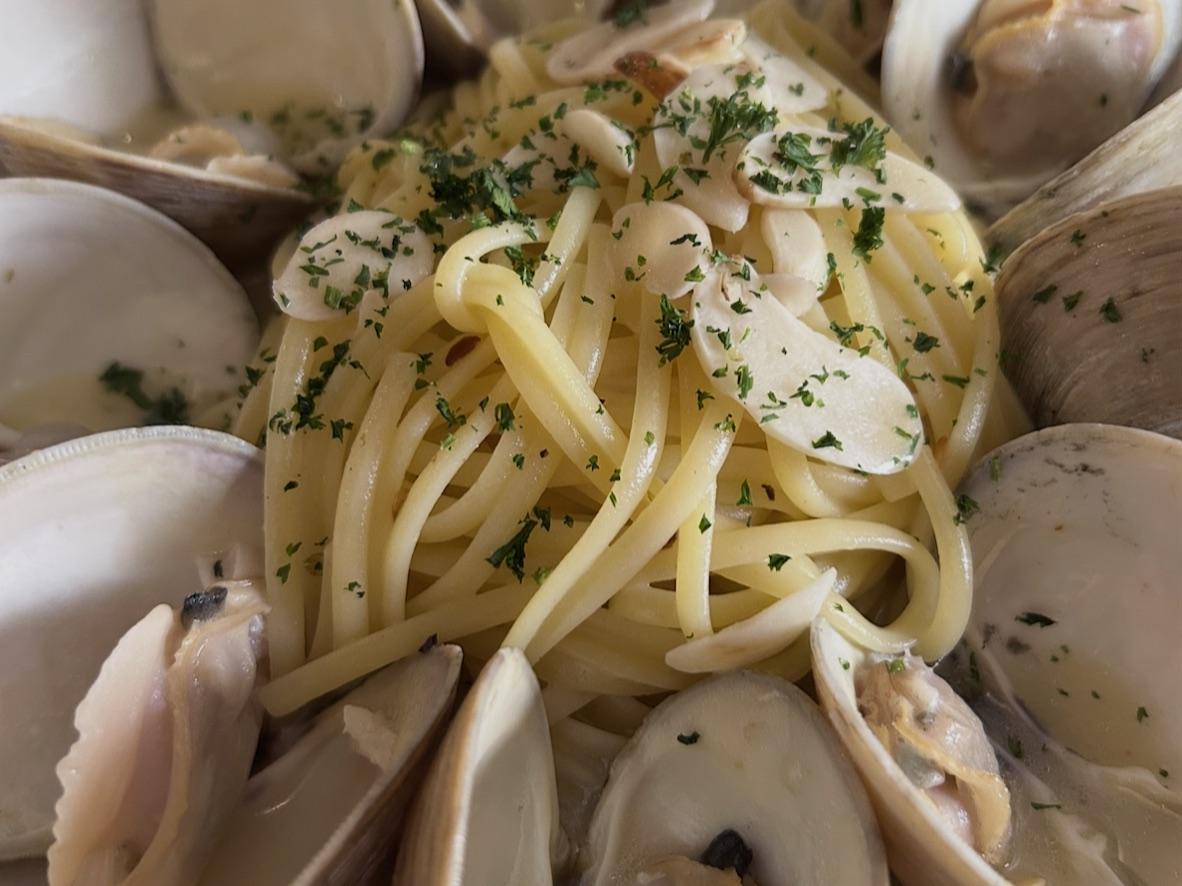
Linguine with clams is exactly how I want clam pasta to look: pale noodles, plenty of shells, parsley, and enough broth in the bottom of the bowl to drag each forkful through. It is not a dramatic dish. Then you get the white wine and clam liquor caught on the pasta, salty and a little sweet, and the whole thing makes sense.
Use the smallest live clams you can find, preferably littlenecks, manilas, or cockles. They open quickly and stay tender, and their broth becomes the sauce. Larger clams have their place. That place is usually chowder.
- Total
- about 1 hour 5 minutes
- Serves
- 2
Recipe
Linguine with Clams
- Prep
- 15 minutes
- Cook
- 20 minutes
- Rest
- 30 to 60 minutes
- Total
- about 1 hour 5 minutes
- Serves
- 2
Ingredients
For the clams and linguine
For the white wine sauce
For the toasted breadcrumbs
Instructions
- 1
Soak the clams
Stir the soaking salt into 1 quart cold water until dissolved. Add the clams and refrigerate for 30 to 60 minutes. Lift the clams out with your hands or a slotted spoon, leaving the grit behind in the bowl. Do not pour the soaking water over them again.
- 2
Scrub and sort
Scrub the clams under cold running water. Discard any cracked clams. If one is open, tap it firmly on the counter. Discard it if it does not close.
- 3
Toast the breadcrumbs
If you are making the breadcrumbs, warm 1 tablespoon olive oil in a small skillet over medium heat. Add the breadcrumbs and a pinch of salt. Cook for 3 to 5 minutes, stirring often, until deep golden and crisp. Transfer to a bowl so they stop browning.
- 4
Boil the pasta water
Bring about 3 quarts of water to a boil in a large pot. Salt it with 1 tablespoon Diamond Crystal kosher salt or 1½ teaspoons fine sea salt. The clam broth is already salty, so this is lighter seasoning than you might use for another pasta.
- 5
Cook the garlic
Set a wide skillet or Dutch oven over medium-low heat. Add the ¼ cup olive oil and sliced garlic. Cook for 3 to 5 minutes, stirring often, until the garlic is pale gold at the edges and no longer smells raw. Keep the heat gentle. Dark garlic makes the whole pan bitter.
- 6
Add the wine
Add the red pepper flakes and stir for about 15 seconds. Pour in the wine, raise the heat to medium-high, and let it boil for 1 minute.
- 7
Steam the clams
Add the clams and cover the skillet. Drop the linguine into the boiling water right after the lid goes on. After 4 minutes, begin transferring opened clams to a bowl. Cover the pan again and check every minute. Most should open within 6 to 8 minutes. Discard any that remain closed after 10 minutes.
- 8
Undercook the linguine
Cook the linguine until it is about 2 minutes short of al dente. Reserve at least 1 cup of pasta water, then drain.
- 9
Check the clam broth
Look closely at the liquid in the clam pan. If you see grit, strain the broth through a fine-mesh strainer into a measuring cup, wipe out the skillet, and pour the broth back in. If it looks clean, leave it where it is.
- 10
Finish the pasta in the sauce
Add the drained linguine to the clam broth with ¼ cup pasta water. Toss over medium heat for 1 to 2 minutes, until the pasta finishes cooking and the liquid turns glossy enough to coat the noodles. Add more pasta water 1 tablespoon at a time only if the skillet gets dry.
- 11
Return the clams
Turn off the heat. Add the parsley, black pepper, a small drizzle of olive oil, and the butter, if using. Return the clams with any juice collected in the bowl and fold everything together gently.
- 12
Taste and serve
Taste before adding lemon. A small squeeze helps if the sauce tastes flat, but too much can make the clam broth taste thin. Divide among shallow bowls, add more parsley, and pass the breadcrumbs at the table. Skip the cheese.
Estimated nutrition
Per serving (1 of 2)
- Calories
- 835 kcal
- Protein
- 27.1 g
- Carbs
- 91.4 g
- Fat
- 32.2 g
Calculated from the listed amounts. Optional or unmeasured additions are excluded; brands, substitutions, and cooking losses can change the result.


Shopping list
Produce
Meat & seafood
Dairy & eggs
Spices
Pantry
Other
Linguine with Clams
Nutrition · Per serving (1 of 2)
- Protein
- 27.1 g
- Carbs
- 91.4 g
- Fat
- 32.2 g
835 Cal
Estimated · optional extras excluded
Linguine with Clams
Soak the clams
Stir the soaking salt into 1 quart cold water until dissolved. Add the clams and refrigerate for 30 to 60 minutes. Lift the clams out with your hands or a slotted spoon, leaving the grit behind in the bowl. Do not pour the soaking water over them again.
For this step
All ingredients · 16
Your recipes, wherever you find them.
Social posts


Photos

Cookbooks
Recipe cards


Your cookbook
Shortcuts and substitutions
No linguine
Spaghetti, bucatini, or another long pasta works. Avoid small shapes, which do not catch the clam broth in quite the same way.
No white wine
Use ½ cup low-sodium chicken stock plus ¼ cup water. Finish the sauce with a small squeeze of lemon. It will not taste identical, but it will still have enough acidity to keep the olive oil and clam liquor from feeling flat.
No fresh breadcrumbs
Panko is completely fine. Crush it lightly with your fingers before toasting if the pieces are especially large.
Recipe notes
Use small live clams
Littlenecks, manilas, and cockles open quickly and stay tender. Buy them from a busy seafood counter and keep them cold in the refrigerator under a damp towel until you cook.
Take each clam out when it opens
The clams will not all open at once. Moving each one to a bowl as it opens keeps the early ones from turning chewy while the stubborn few catch up.
Do not skip checking for grit
Even well-scrubbed clams can release sand. Straining the broth takes about a minute and is much better than finding out with your teeth.
Finish the pasta in the clam broth
Draining the linguine while it is still firm gives it time to absorb the clam broth without becoming soft. The last minute or two in the skillet is what turns loose cooking liquid into a sauce that clings.
Frequently Asked Questions
What kind of clams are best for linguine with clams?
Small live clams such as littlenecks, manilas, or cockles are best. They open quickly, stay tender, and release a clean, briny liquid that becomes the sauce.
How do I get sand out of clams?
Soak the clams in cold salted water for 30 to 60 minutes, then lift them out instead of pouring them into a colander. Scrub the shells under cold water. If the cooking broth looks gritty, strain it before adding the pasta.
What wine should I use for linguine alle vongole?
Use a dry white wine you would drink, such as Pinot Grigio, Sauvignon Blanc, or an unoaked Italian white. Avoid sweet wine and heavily oaked Chardonnay.
Why is my clam sauce watery?
The sauce tightens when undercooked linguine finishes directly in the clam broth. Tossing releases starch from the pasta, and a small amount of butter can help emulsify the liquid. Do not add all of the reserved pasta water at once.
Should I put Parmesan on linguine with clams?
I would skip it. Parmesan can cover the sweet, briny flavor of the clams. Toasted breadcrumbs add crunch without changing the seafood flavor as much.
Can I make linguine with clams ahead?
Not really. You can clean the clams and toast the breadcrumbs ahead, but cook the pasta and clams shortly before serving. Reheated clams toughen quickly and the pasta absorbs the sauce as it sits.