Crispy Taro Duck
荔茸香酥鴨 / 芋泥香酥鴨
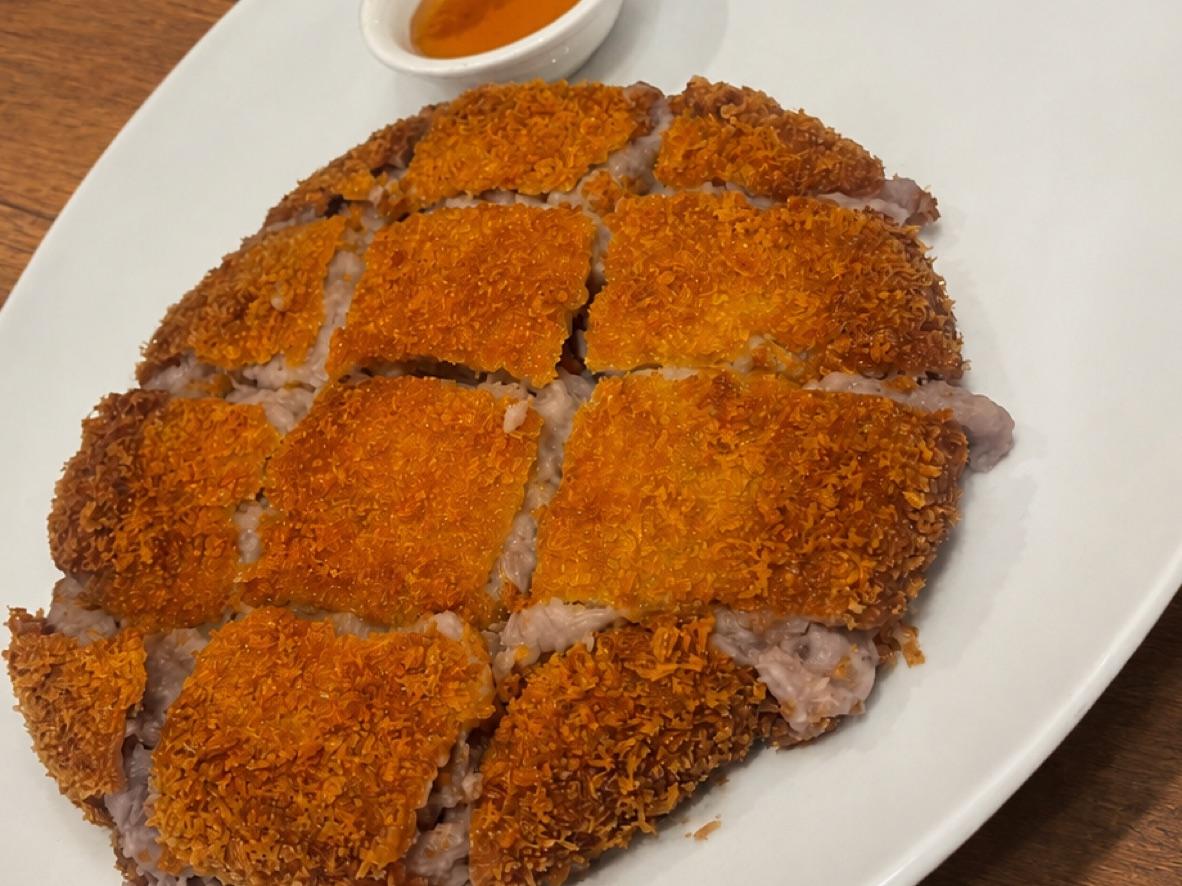
Crisp taro on top, rich duck underneath, and plum sauce on the side. It takes a little prep, but once the slab is chilled, the frying is straightforward.
- Total
- about 1 hour 45 minutes, including chilling
- Serves
- 4 to 6
Recipe
Crispy Taro Duck
- Prep
- 45 minutes
- Cook
- 15 minutes
- Rest
- 45 minutes
- Total
- about 1 hour 45 minutes, including chilling
- Serves
- 4 to 6
Ingredients
Duck
Taro layer
For frying
Plum sauce
Instructions
- 1
Bone and flatten the duck
Remove the bones from the duck legs, keeping the meat in fairly large pieces. Trim away thick pockets of fat, but leave the skin attached. Arrange the pieces close together, skin-side down, to form a rectangle about 6 by 8 inches. Cover with parchment paper and press firmly with the bottom of a heavy pan to flatten the duck into an even layer.
- 2
Season the duck
Mix the soy sauce, Shaoxing wine, five-spice, and white pepper. Brush it lightly over the exposed meat. Dust the meat side with a thin layer of potato starch — this helps the taro stick.
- 3
Steam and mash the taro
Cut the taro into ½-inch slices or small chunks. Steam over simmering water for 20 to 25 minutes, until completely tender — a chopstick or knife should slide through without resistance. Transfer the taro to a bowl and mash it while hot, making sure there are no firm pieces left. Do not boil the taro; it absorbs water easily and can become too loose to shape.
- 4
Make the wheat-starch dough
Place the wheat starch in a heatproof bowl. Pour in the boiling water while stirring quickly with chopsticks or a sturdy spoon, mixing until it forms a thick, slightly translucent dough. Let it cool for a minute or two, just until you can handle it safely.
- 5
Combine the taro layer
Add the starch dough to the hot mashed taro along with the lard, sugar, salt, five-spice, and white pepper. Knead or mix thoroughly until smooth and evenly combined. It should feel soft and moldable, like firm mashed potatoes, and hold its shape without sticking heavily to your hands. If it feels wet, spread it in a skillet and cook over low heat for 2 to 3 minutes, stirring constantly, to remove excess moisture.
- 6
Assemble the slab
Press the taro mixture over the meat side of the duck, making the taro layer about ½ to ¾ inch thick. Press firmly so there are no gaps between the taro and duck. Smooth the top, then lightly roughen the surface with a fork to create more crisp edges during frying. Dust the top and sides very lightly with potato starch. For easier frying, divide the slab into two equal pieces.
- 7
Chill the slab
Place on a parchment-lined tray and refrigerate uncovered for 45 minutes. For a faster option, freeze for 20 to 25 minutes. The slabs should feel firm but not frozen solid.
- 8
Fry
Pour about 1 to 1½ inches of oil into a wok, Dutch oven, or deep skillet and heat to 340°F (170°C). Place one chilled slab on a wide slotted spatula or frying screen and carefully lower it into the oil, taro-side down. Fry for 4 to 5 minutes, keeping the oil between 335 and 350°F, until the taro is deep golden and crisp. Carefully turn the slab and fry the duck side for another 1 to 2 minutes. Everything is already cooked — fry only until the exterior is crisp and the center is hot. Repeat with the second slab, letting the oil return to temperature first.
- 9
Drain and cut
Transfer the fried slabs to a wire rack, taro-side up, and let them rest for 5 minutes — resting briefly helps the layers settle and makes cleaner cuts. Use a sharp knife to cut each slab into 2-inch squares, pressing straight down instead of sawing, which can pull the taro away from the duck.
- 10
Make the sauce and serve
Stir together the plum sauce and rice vinegar. Add hot water, one teaspoon at a time, until the sauce is loose enough for dipping, and stir in a little chili sauce for heat if you like. Serve the taro duck immediately with the plum sauce on the side.
Estimated nutrition
Per serving (1 of 6)
- Calories
- 433 kcal
- Protein
- 11.3 g
- Carbs
- 40.6 g
- Fat
- 24.8 g
Calculated from the listed amounts. Optional or unmeasured additions are excluded; brands, substitutions, and cooking losses can change the result.


Shopping list
Spices
Pantry
Other
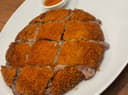
Crispy Taro Duck
Nutrition · Per serving (1 of 6)
- Protein
- 11.3 g
- Carbs
- 40.6 g
- Fat
- 24.8 g
433 Cal
Estimated · optional extras excluded
Crispy Taro Duck
Bone and flatten the duck
Remove the bones from the duck legs, keeping the meat in fairly large pieces. Trim away thick pockets of fat, but leave the skin attached. Arrange the pieces close together, skin-side down, to form a rectangle about 6 by 8 inches. Cover with parchment paper and press firmly with the bottom of a heavy pan to flatten the duck into an even layer.
All ingredients · 20
Your recipes, wherever you find them.
Social posts


Photos

Cookbooks
Recipe cards


Your cookbook
Recipe notes
Cook’s notes
- Vegetable shortening is the closest substitute for lard; refined coconut oil also works.
Swaps & substitutions
- Wheat starch (澄粉) is hard to replace without changing the texture — look for it at a Chinese market.
Equipment & shortcuts
- If your skillet is narrow, divide the slab into four pieces before chilling.
Make ahead & storage
- Store-bought Chinese roast duck is the easiest and most flavorful option. No duck legs? Use about 12 ounces of cooked duck breast or shredded roast duck.
- Make ahead: assemble and refrigerate the slabs up to one day in advance, then fry shortly before serving.
- To reheat, use a rack in a 400°F oven for 8 to 10 minutes. Avoid the microwave, which softens the taro crust.