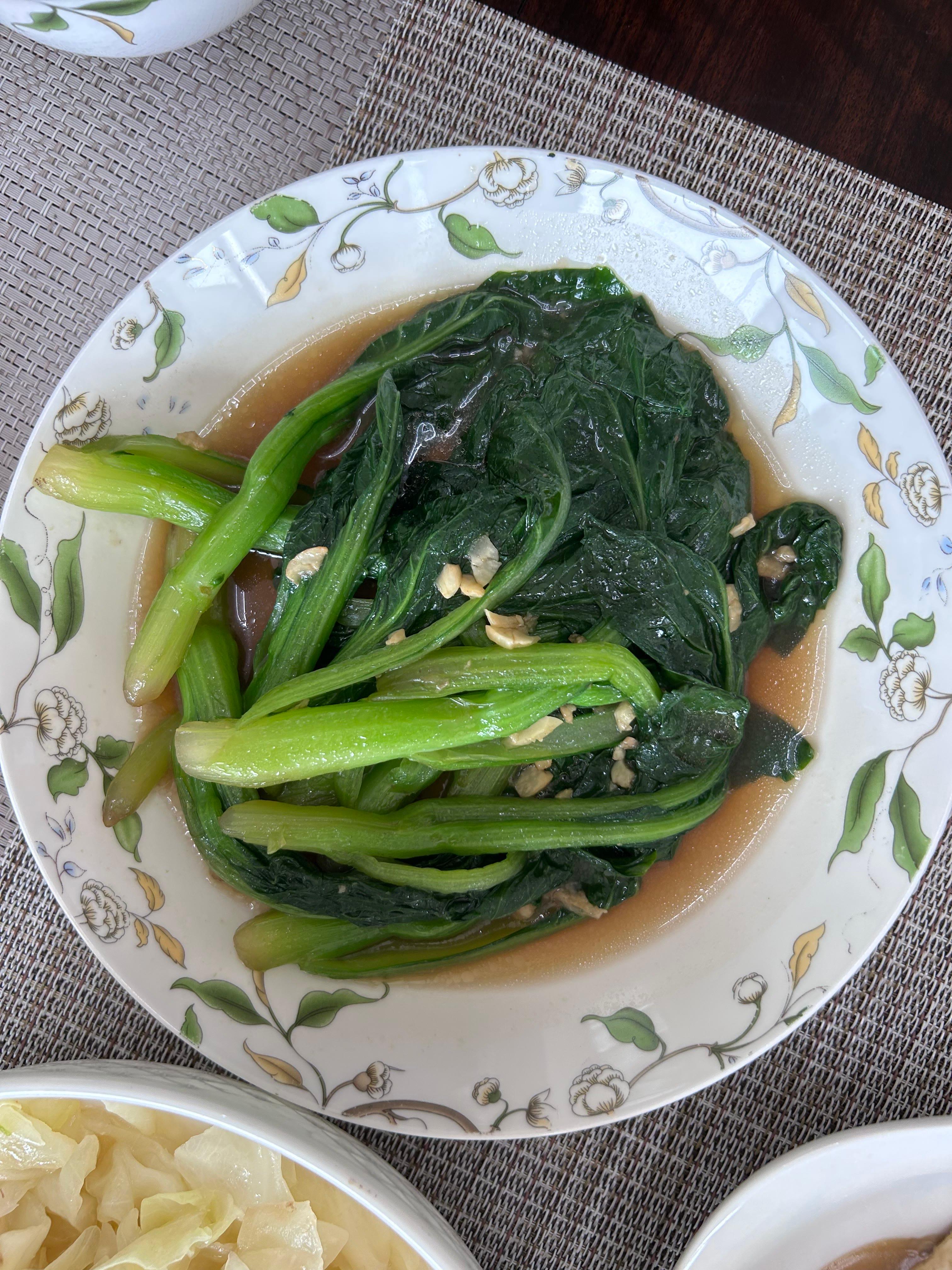
Garlic Choy Sum with Light Sauce
蒜蓉菜心
Tender choy sum stalks and wilted leaves sit in a light garlic sauce seasoned with oyster sauce and soy. Serve them hot as a side dish.
- Total
- 16 minutes
- Serves
- 4
Before you cook
Give the stems a head start
Split very thick lower stalks lengthwise, then lower the stems into boiling water before the leaves so both finish together.
Drain before adding the sauce
Let the blanched greens drain well before they enter the skillet. Water caught between the leaves will dilute the garlic sauce.
Recipe
Garlic Choy Sum with Light Sauce
- Prep
- 10 minutes
- Cook
- 6 minutes
- Total
- 16 minutes
- Serves
- 4
Ingredients
Choy sum
Light sauce
Instructions
- 1
Wash and sort the greens
Wash the choy sum well, opening the leaves where they meet the stalks to rinse out grit. Trim the dry ends. If a stalk is thicker than your thumb, split its lower half lengthwise so it cooks with the thinner stalks. Shake off the excess water.
- 2
Blanch the stalks and leaves
Bring a large pot of water to a boil. Hold the choy sum by the leafy ends and dip the stalks into the water for 45 seconds. Lower the leaves into the water and cook for another 45 to 60 seconds, until the stems are just tender and the leaves have wilted. Lift the greens out and drain well.
- 3
Cook the garlic sauce
While the greens drain, heat a wide skillet over medium heat. Add the oil and garlic and stir for 20 to 30 seconds, until fragrant but not browned. Add the water or stock, oyster sauce, light soy sauce, and sugar. Stir and simmer for 1 minute.
- 4
Coat and serve
Add the drained choy sum to the skillet and turn it gently for about 30 seconds so the garlic and sauce reach the stalks and leaves. Transfer to a shallow dish and spoon over the sauce left in the pan. Serve immediately.
Estimated nutrition
Per serving (1 of 4)
- Calories
- 65 kcal
- Protein
- 3 g
- Carbs
- 6 g
- Fat
- 4 g
Calculated from the listed amounts. Optional or unmeasured additions are excluded; brands, substitutions, and cooking losses can change the result.
Garlic Choy Sum with Light Sauce
For this step
All ingredients · 7
Have Shio? Open the app to import and review this recipe.
Saving recipes from websites is free.
Choose and clean the choy sum
Look for firm green stalks and unwilted leaves. Small flower buds are fine. Rinse around the base of each leaf, where sand can hide.
Young choy sum needs only a short blanch. Check a thick stalk with a knife tip; it should be just tender before you lift the greens out.
Season the light sauce
Oyster sauce and light soy sauce season the broth here. Taste the finished sauce before adding salt; brands vary in saltiness.
Frequently Asked Questions
Is choy sum the same as bok choy?
No. Choy sum has long, slender green stalks, leaves, and sometimes small flower buds. Bok choy grows in a tighter head with broader, spoon-shaped stems. Both take well to garlic, but whole choy sum stalks suit this blanch-and-sauce method.
Can I make garlic choy sum without oyster sauce?
Yes. Use vegetarian mushroom sauce in the same amount, or omit it and season the broth with a little more light soy sauce. Taste before adding extra salt.