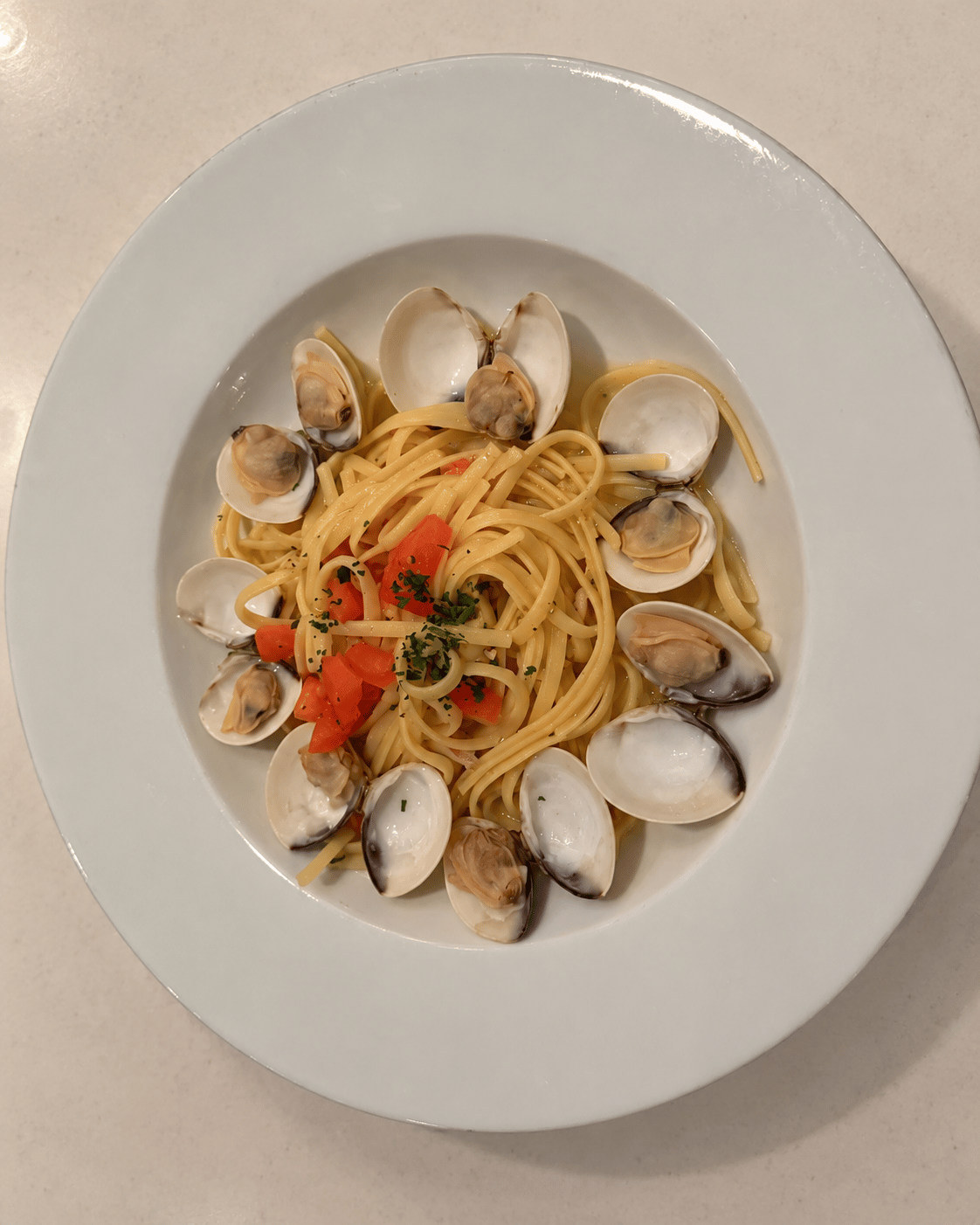
Linguine with Little Neck Clams
Linguine alle Vongole
Littleneck clams make a light, briny sauce for this linguine. Steam them with dry white wine, then strain the cooking liquid to keep any grit out of the pasta. Finish the slightly undercooked linguine in that broth with garlic, olive oil, butter, and a splash of pasta water until glossy. Fold the clams back in to warm through, and finish with red pepper flakes and parsley. Serves four.
- Total
- about 1 hour 5 minutes, including soaking
- Serves
- 4
Recipe
Linguine with Little Neck Clams
- Prep
- 15 minutes
- Cook
- 20 minutes
- Rest
- 30 minutes soaking
- Total
- about 1 hour 5 minutes, including soaking
- Serves
- 4
Ingredients
For cleaning the clams
For the linguine and sauce
Optional serving extras
Instructions
- 1
Clean and soak the clams
Discard cracked shells and any clams that stay open when tapped. Dissolve the soaking salt in the cold water. Add the clams and refrigerate for 30 minutes. Lift them out with a slotted spoon, leaving any sand behind, and scrub under cold running water. Discard the soaking water. A short soak may not remove all grit, so strain the cooking liquid later.
- 2
Cook the pasta
Bring a large pot of lightly salted water to a boil. Cook the linguine for 2 minutes less than the package time so it is still firm. Reserve 1½ cups pasta water before draining. Coordinate the pasta with the clam steaming so it can go into the sauce promptly.
- 3
Steam the clams
Heat 2 tablespoons of the olive oil in a wide pot or Dutch oven over medium-high heat. Add the wine and bring to a simmer, then add the clams and cover. Steam for 5 to 9 minutes, shaking the pot occasionally, until the shells have opened and the meat is opaque and firm. Work in batches if needed so the pot is not crowded. Transfer cooked clams to a bowl and discard any that remain closed. Strain the cooking liquid through a fine-mesh sieve lined with a clean, damp paper towel or cheesecloth into a heatproof bowl. Reserve this clam broth.
- 4
Build the sauce
Wipe out the pot. Add the remaining 2 tablespoons olive oil and the butter over medium-low heat. Add the garlic and red pepper flakes. Cook, stirring, for about 2 minutes, until the garlic is fragrant and just pale gold at the edges. Lower the heat if it colors too quickly.
- 5
Finish the linguine in the broth
Pour the strained clam broth into the pot and bring to a simmer. Add the undercooked linguine and a splash of reserved pasta water. Toss over medium heat for about 2 minutes, until the pasta is al dente and the liquid forms a glossy coating. Add pasta water a little at a time if the pan gets dry; do not pour it all in at once.
- 6
Return the clams
Remove from the heat and toss in the parsley. Fold the clams and any collected juices back into the pasta just to warm through. Add a little more pasta water if the sauce is tight. Taste before adding salt because the clam broth can already be salty.
- 7
Serve
Divide among 4 warm bowls and serve immediately. Add a small drizzle of extra olive oil and crusty bread if desired. The optional drizzle and bread are excluded from the nutrition estimate.
Estimated nutrition
Per serving (1 of 4)
- Calories
- 756 kcal
- Protein
- 32.7 g
- Carbs
- 91.1 g
- Fat
- 27.2 g
Calculated from the listed amounts. Optional or unmeasured additions are excluded; brands, substitutions, and cooking losses can change the result.


Shopping list
Produce
Meat & seafood
Dairy & eggs
Spices
Pantry
Other
Linguine with Little Neck Clams
Nutrition · Per serving (1 of 4)
- Protein
- 32.7 g
- Carbs
- 91.1 g
- Fat
- 27.2 g
756 Cal
Estimated · optional extras excluded
Linguine with Little Neck Clams
Clean and soak the clams
Discard cracked shells and any clams that stay open when tapped. Dissolve the soaking salt in the cold water. Add the clams and refrigerate for 30 minutes. Lift them out with a slotted spoon, leaving any sand behind, and scrub under cold running water. Discard the soaking water. A short soak may not remove all grit, so strain the cooking liquid later.
For this step
All ingredients · 13
Your recipes, wherever you find them.
Social posts


Photos

Cookbooks
Recipe cards


Your cookbook
Cleaning clams and removing grit
Buy live clams from a reputable seafood seller and keep them refrigerated in a breathable container under a damp towel until cooking. Discard cracked shells and clams that stay open when tapped.
Use cold saltwater for the soak rather than fresh water with cornmeal. Ask the seller whether the clams have already been purged. Home soaking helps with grit but does not remove pathogens or contaminants.
Always strain the cooking liquid before making the sauce. Lift clams out of the soaking water instead of pouring the sandy water over them.
A glossy white wine sauce
Finish the slightly undercooked pasta in the strained clam broth. Pasta starch, olive oil, and butter help the sauce come together; there is no cream in this version.
Keep sliced garlic over gentle heat and stop at pale gold. Add pasta water gradually and toss until the sauce coats the linguine without becoming pasty.
Serving and portions
This recipe serves 4. Nutrition includes the listed pasta, estimated edible clam meat and broth, measured olive oil, butter, wine, garlic, chile flakes, and parsley. Shells and discarded soaking liquid are excluded.
The photo includes a small tomato garnish. Tomato is not part of the base recipe or nutrition estimate. Optional finishing oil and bread are also excluded.
Prepare the clams ahead if useful, keeping them refrigerated, but cook the pasta and sauce shortly before serving. The pasta absorbs sauce and the clams can toughen on reheating.
Frequently Asked Questions
Why is my clam sauce gritty?
Clams can release sand during cooking even after soaking. Lift them out of the soak without disturbing the grit, scrub the shells, and strain the cooking liquid through a fine-mesh sieve lined with a damp paper towel or cheesecloth before adding the pasta.
How do I know which clams to discard?
Before cooking, discard cracked shells and any clams that stay open when tapped. After steaming, discard clams that remain closed. An opening shell alone does not establish freshness or thorough cooking; buy from a reputable seller and cook until the meat is opaque and firm.
Can I use canned clams instead of fresh?
Yes, though the texture and flavor will differ. Use about 10 to 12 ounces drained canned clams and reserve their packing juice. Add bottled clam juice if needed to bring the liquid to about 1 cup. Skip steaming and add the canned clams at the end just to heat through. This substitution changes the nutrition estimate.
What kind of white wine should I use?
Use a dry white wine such as Pinot Grigio or Sauvignon Blanc. Choose one you would drink, and avoid sweet wine or heavily oaked styles that can dominate the clam broth.
Can I make this ahead?
Clean the clams ahead and keep them refrigerated, but cook the pasta and sauce shortly before eating. The clams can toughen with reheating, and the pasta absorbs the sauce as it sits.
What pasta shape is best?
Linguine works well because its flat strands catch the sauce. Spaghetti is a good substitute. Other long pasta can work too; adjust the cooking time and finish it in the clam broth while it is still slightly firm.