
Japanese-Peruvian · Appetizers & Sides
Yellowtail Sashimi with Jalapeño
Hamachi Jalapeño with Yuzu Soy
Serves 4 · Prep: 20 minutes · Cook: none · Total: 20 minutes
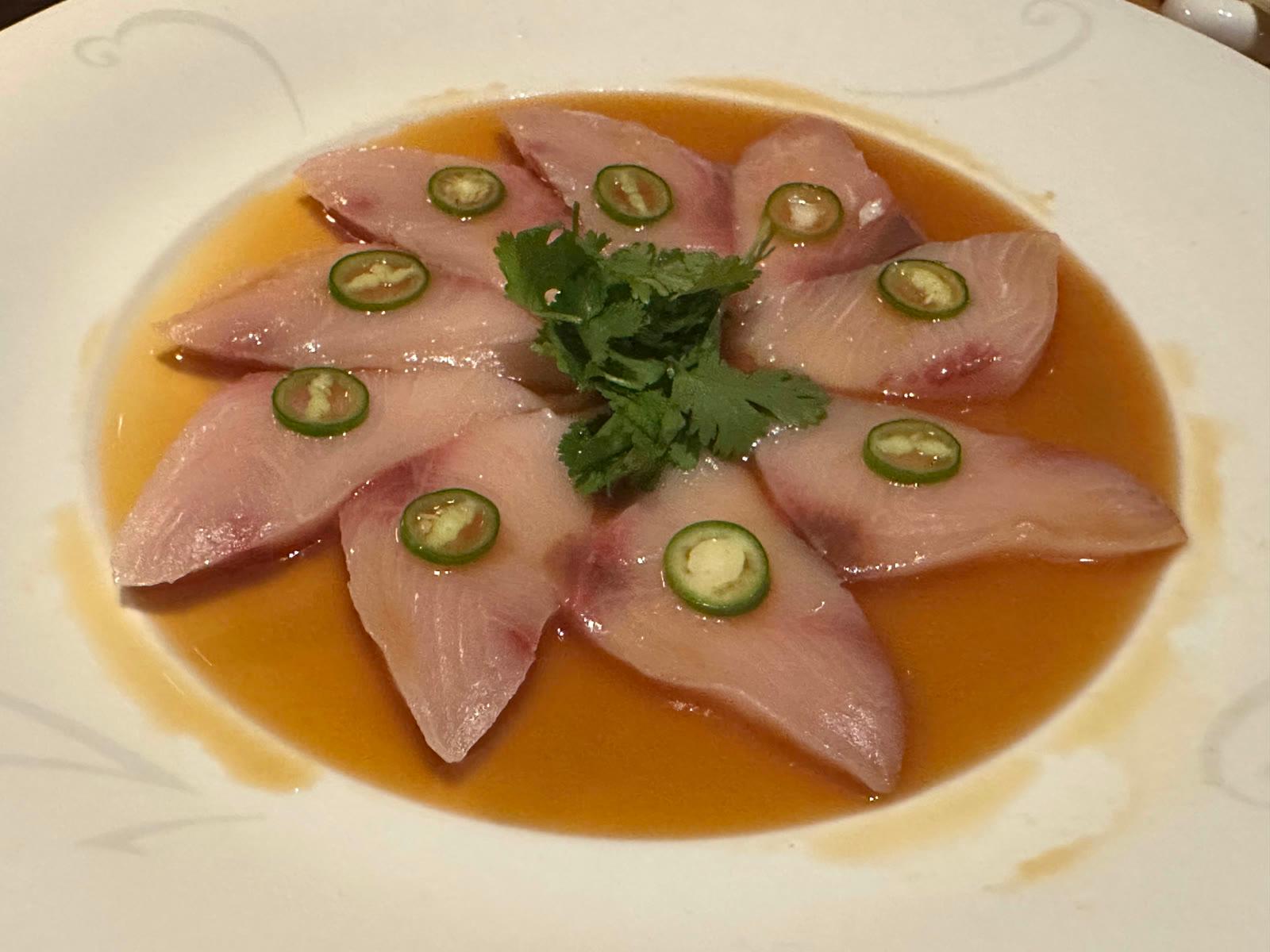
Look for yellowtail under the name hamachi at a Japanese or Korean market, a good fish counter, or online. It is usually sold frozen in a vacuum-packed loin. Tell the fishmonger you plan to serve it raw and ask how it was handled; “sashimi-grade” on its own is not a regulated safety standard.
The jalapeño is especially good against the soft, rich fish. Cut it thin enough to get a little crunch and heat without losing the yellowtail. Have the sauce mixed and the plate chilled before you slice, then spoon on the yuzu soy just before serving. Citrus starts changing the fish’s texture if it sits too long.
Ingredients
For the yuzu soy
- 2 tablespoons yuzu juice
- 1½ tablespoons Japanese soy sauce
- 1 tablespoon unseasoned rice vinegar
- 2 teaspoons mirin
- 1 teaspoon neutral oil, such as grapeseed or avocado oil
For the yellowtail
- 10 ounces sashimi-quality yellowtail or hamachi loin, very cold
- 1 small jalapeño
- ¼ cup small cilantro leaves
- Flaky salt, optional
Instructions
- 1
Chill the serving plate
Put a large plate or four small plates in the refrigerator. Cold plates buy you a little time once the fish is sliced.
- 2
Mix the yuzu soy
Stir the yuzu juice, soy sauce, rice vinegar, mirin, and neutral oil until combined. Taste it with a cilantro leaf. It should be salty and citrusy, not sweet. Refrigerate while you cut the fish.
- 3
Slice the jalapeño
Cut the jalapeño crosswise into paper-thin rounds. You need 10 to 12 good slices. If the jalapeño is especially hot, knock out the seeds with the tip of a paring knife.
- 4
Slice the yellowtail
Pat the fish dry. With a very sharp knife, cut across the grain into ¼-inch slices, pulling the blade through in one clean stroke. Do not saw at it. Arrange the slices on the chilled plate as you go.
- 5
Dress the plate
Spoon the yuzu soy around and lightly over the fish. Put one jalapeño round on each slice and set the cilantro in the center. Add a few flakes of salt only if the fish needs it. Serve immediately.
Shortcuts and substitutions
No fresh yuzu
Use 1 tablespoon bottled 100% yuzu juice plus 1 tablespoon fresh lemon juice. Bottled yuzu is much easier to find, and this is exactly the sort of job it handles well.
No yellowtail
Use hamachi, kampachi, or salmon sold specifically for raw preparation. The texture changes, but the yuzu soy and jalapeño still make sense.
Less heat
Use the narrow end of the jalapeño, where the slices are smaller, or swap in very thin serrano-free cucumber rounds. The plate will lose some bite but keep the cool crunch.
Recipe notes
This is a home recreation
This recipe is a home reconstruction based on the plate in the photograph, not a restaurant formula. The visible cues are the yellowtail, jalapeño, cilantro, and amber citrus-soy sauce; the measurements are sized for a home kitchen.
Buy fish for raw preparation
Ask a reputable fishmonger for yellowtail intended to be eaten raw and confirm how it was handled. The FDA notes that previously frozen fish is the safer rule of thumb for raw dishes because freezing can kill parasites, though it does not kill every harmful germ. People who are pregnant, very young, older, or immunocompromised should avoid raw fish. Read the FDA seafood guidance.
Keep it cold
Refrigerate the fish until the knife and plate are ready, then serve as soon as it is dressed. Citrus changes the surface texture if the fish sits in the sauce.
Frequently Asked Questions
What is yellowtail jalapeño?
It is a cold sashimi plate of thin yellowtail slices with jalapeño, cilantro, and a citrus-soy sauce. This home version uses yuzu juice, soy sauce, rice vinegar, mirin, and neutral oil.
Are hamachi and yellowtail the same fish?
Hamachi is the Japanese name commonly used for young yellowtail. Fish counters may label the same ingredient hamachi or yellowtail, so ask whether the cut is suitable for raw preparation rather than relying on the label alone.
Can I make yellowtail jalapeño ahead?
Mix the sauce and slice the jalapeño a few hours ahead, but keep both cold and separate. Slice and dress the yellowtail just before serving so the fish stays firm and chilled.
How thick should sashimi slices be for this dish?
Cut the yellowtail about ¼ inch thick. Thinner pieces disappear under the sauce; much thicker pieces are harder to eat in one bite.
More recipes to try

Save this recipe, and any recipe from anywhere, in Shio.
Get Shio